Day 1 - on the road
It’s Monday morning on 7 Sept as we check out of our Southall apartment. An excellent neighbourhood, but the Airbnb itself had too many deficiencies to deserve a five-star rating, particularly as we ran out of toilet paper. Thank goodness Pauline had the presence of mind to cover contingencies!
We walk for half an hour to Enterprise Rentals to pick up our pre-booked car – a Ford Focus or similar. Large enough to take our suitcases in the boot, but small and economical enough to navigate narrow English lanes. We decided against an EV – they’re great when you can reliably charge overnight, but introduce unnecessary complications when you’re on the road daily. An economical hybrid will be fine.
We’ve done the online check-in, so it’s just a matter of showing drivers’ licences. First problem. “Oh, there are two drivers. That’ll be £10 extra per day”. We’re not impressed – nowhere in the booking process were we given the option to nominate a second driver. Then we’re shown to the car. A Toyota Yaris hybrid. Not similar to a Focus. Smaller, and really designed as a city car. However it will be more economical, and given the price of petrol that’s a plus.
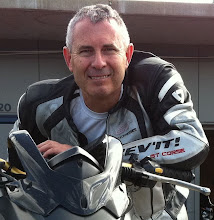
We’re in no hurry – all we need to do is get to our accommodation in Weedon Lois, not far from the Silverstone raceway. I idly think of hiring a bike and doing some laps like I did at Phillip Island years ago, but think better of it. Instead we head for Great Missendon for a morning coffee, and noting a peloton converging on a café the choice is obvious. Travellers quickly learn that cyclists have an uncanny knack of sniffing out the best coffee in town. And they weren’t wrong.
This is Roald Dahl country. Sam has already quoted “The Pig” poem to us (a remarkably smart pig figures out that humans plan to turn him into bacon. But the pig has other ideas…), so what better than to visit the local museum. Sadly closed. Sorry Sam – we’ll need to get a postcard from somewhere else.
On to the Ivinghoe beacon near Luton. Long before telegraphs and radios were invented, beacons were used to signal emergencies such as approaching armies. At 233m above the Chiltern escarpment this one was ideally located for long‑distance signalling by lighting beacon fires. It’s also excellent for catching the wind, as Pauline ably demonstrates.

The image etched into the Chilterns chalk to the centre left is the Whipsnade White Lion, one of the largest and most striking chalk hill figures in Britain.
Of course the problem with beacons is that you knew there was some sort of emergency, but it might take a day for the detail to arrive on horseback. This however was an improvement on today’s computer notifications, where you’re informed of an issue with an inane “Something went wrong”, with no supporting detail arriving at all.
We arrive at our destination Airbnb – Thomas’ Home in Lois Weedon. Not a typo – the name is reversed! What a contrast to our cheap London apartment. Here we’re in an apartment in an early 1900s manor, recently renovated. All mod cons, but in a quintessentially English setting. Our host, Thomas, is very informative, and we later find he’s a master craftsman in mosaics. Amazing the places you stay and the people you meet when choosing Airbnb for accommodation.
Day 2 – Warwick
We wake to light rain. While the vegetation is delighted, it does put a bit of a dampener on our plans. Or does it? It’s forecast to clear at lunchtime, and the weather will put other people off.
I wasn’t sure whether I’d been to Warwick Castle 45 years ago. A cynic might say that if you’ve seen one castle in Britain you’ve seen them all. Alternatively, given I'm an old codger now, my memory might be failing me. Pauline’s keen to go, so we set the GPS to avoid motorways and wind our way north west to Warwickshire.
The castle sits on the Avon, just upstream of Shakespeare country at Stratford‑upon‑Avon. It's one of England’s most impressive medieval fortresses, shaped by nearly a thousand years of conflict and power plays. Needless to say, it had a gaol.

Don't panic - Pauline's not about to lose her head for practicing witchcraft.
The armoured horse is a surprise. It looks like a static display, but it realistically swishes its tail and blinks periodically, which is surprisingly unnerving, particularly with that lethal spike on its poll.

The live firing of the trebuchet was spectacular. Used in medieval times, it could hurl huge stones, firepots, and dead pigs (to spread disease) into a castle under siege. For the physics students, a trebuchet converts gravitational potential energy (a massive counterweight) into the kinetic energy of a long throwing arm. Pigs were chosen as they were more aerodynamic. In those days pigs really could fly. In the pic below you can see the 18kg payload on its way. It'll land 200m away.

Obligatory selfie, with monkey in tow.

And of course we had to climb the 500-odd steps up and down winding narrow staircases to get to the top of the highest tower for the view out over the town.

Back to Thomas' place in Lois Weedon. Thomas has latched onto the fact that I work in IT, and could I help him with a little problem. No worries - it's what I do. Thomas has a CNC machine to cut and mill his mosaic pieces, It's driven by an ancient and customised version of Windows XP, and he's having trouble transferring files into it via USB. Could it be configured on his network? We don't solve it, but we prove the concept and I leave him with exactly what he needs to do once he hears from the vendor. We should get a good guest review!
Pauline meanwhile is somewhat bored by the conversation and looks at some of his amazing work.

He is one of England's finest mosaicists, and works on commission for large ornamental pieces that must run to hundreds of thousands of pounds. He has done work for Westminster Abbey, the inlayed coat of arms for Richard III's new tomb, and is currently working on a huge piece for a house in Mayfair.
We leave as good friends, and will keep in touch. Needless to say he has a standing invitation to visit us should he ever come to NZ.
Day 3 - Bletchley Park
We check out of Lois Weedon and head to Bletchley Park. Anyone who works in IT, particularly encryption and AI, knows about Alan Turing. During the Second World War he played a central role at Bletchley Park, developing techniques that helped crack the German Enigma cipher and significantly shortened the war. His later ideas on algorithms and machine intelligence shaped the entire field of computer science.
The Turing test is an enduring part of his legacy. Can a machine be deemed intelligent? To think like a human? In the Turing test, a human judge engages in a text‑based conversation with both a person and a machine; if the judge cannot reliably tell which is which, the machine is said to have passed. I think with the current state of AI we're pretty much at that point now. Or is it just that humans are easily fooled?
Reading Richard Harris' 1995 novel "Enigma" and seeing the 2014 movie "The Imitation Game" starring Benedict Cumberbatch on the plane to Vancouver added impetus to seeing the actual location, especially the huts where everything took place.
Visiting Alan Turing's office coupled with the fictional accounts brought everything alive.

The exhibits were really well done, and the outside of the huts also realistically maintained.

Pauline indulged me. She found it a little dry, but enjoyed the outdoor architecture of the Bletchley mansion which housed the initial code-breaking team.

Sadly, great minds are often persecuted. In Galileo's case his publications defied the Catholic Church. He was forced to recant and was subject to house arrest in 1633, dying eight years later. He was pardoned by the church in 1992.
Despite being a war hero, Turing was convicted for homosexuality ("gross indecency") in 1952. He was subjected to hormonal treatment as part of his sentence which deeply affected him both personally and professionally. He took his own life two years later. He was pardoned in 2013. Oscar Wilde had earlier suffered a similar fate, and was pardoned in 2017.
Huge injustices meted out to brilliant minds. A sad commentary on how society punishes those who challenge the moral, intellectual or social norms of their era.
Tomorrow I inflict more maths and science on Pauline as we head north to Lincolnshire. Not far from Nottingham, but no, it's not Sherwood Forest and Robin Hood. We're going to check out the birthplace of possibly the greatest scientist who's ever lived. Stay tuned!

No comments:
Post a Comment